 English
 français
 Deutsch
 Español
 italiano
 русский
 português
 tiếng việt
 Türkçe
 Polska
 Indonesia
E-mail:
info@rsgbottle.com
EN

Laser engraving wins on detail and complexity, especially for tiny text, photo-realistic logos, or fine linework.
Sandblasting wins on depth and that classic frosted, tactile feel—but it struggles with ultra-fine detail unless you’re paying for top-tier masking.
For low-to-mid budget projects with high detail (like a detailed monogram or a small-batch distillery logo), laser is usually the smarter choice. For larger runs where you want a deep, etched texture, sandblasting can be cost-effective—but setup eats into your detail budget.
-转换自-png_(1).webp "photobank_(2)-转换自-png_(1).webp")
A laser beam vaporizes the glass surface at a microscopic level. You can get 0.1mm line widths, sharp corners, and even grayscale shading. Think of it like a high-end printer for glass.
Best for:
Intricate logos with tiny text
Portraits or scenic illustrations
Serial numbers or QR codes
Multi-level depth (light frosted to deep etch)
A high-pressure stream of abrasive media (usually aluminum oxide) eats away exposed glass through a stencil. The result is a uniform, velvety frosted surface. But fine details? That depends entirely on your stencil quality. Cheap stencils blow out thin lines; premium laser-cut stencils help, but that adds cost.
Best for:
Bold lettering and simple shapes
Deep, touchable etching (great for heavy wash use)
Larger surface coverage
Traditional, rustic look
Winner for detail: Laser, by a noticeable margin.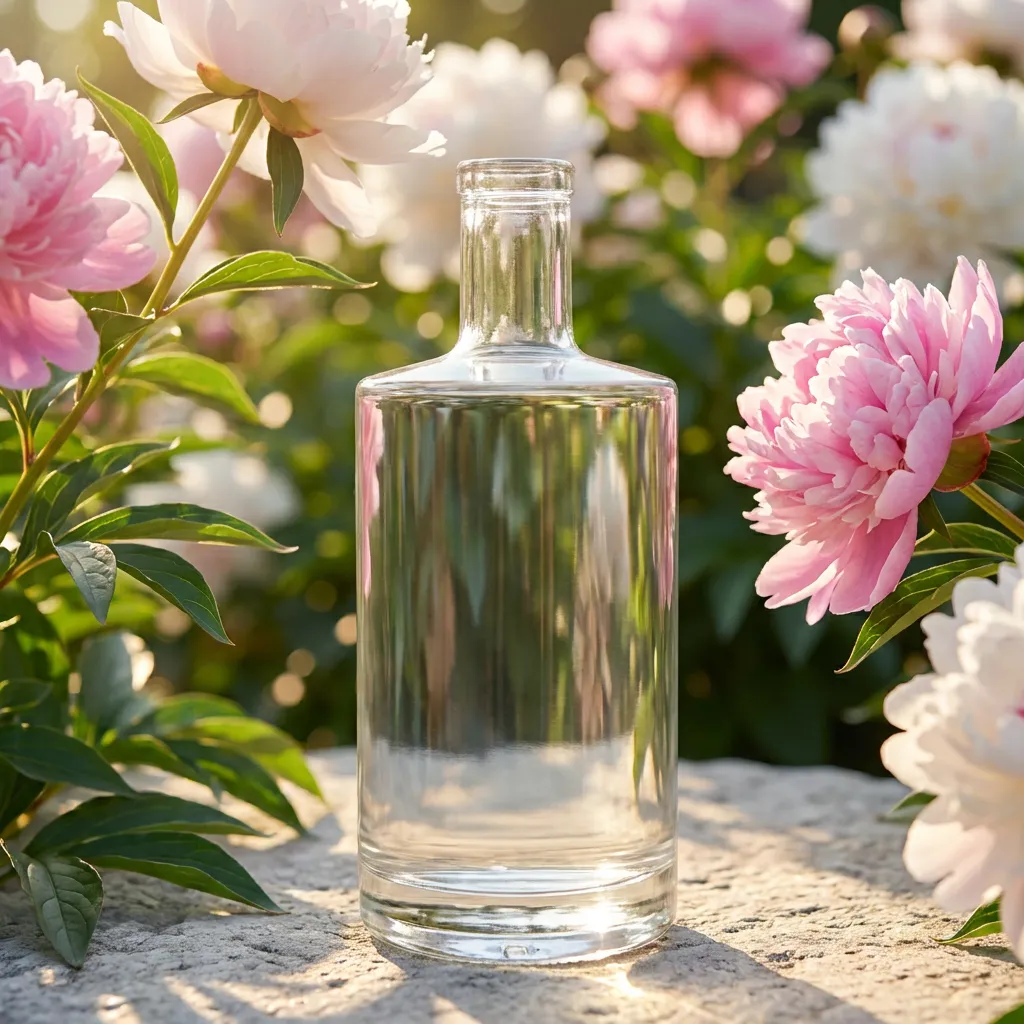
Let’s talk real numbers for small to medium runs in the US.
With laser engraving, setup costs are minimal—often zero to about fifty dollars if you need help prepping a digital file. Per bottle, you're typically looking at five to fifteen dollars for runs under fifty units, dropping to three to eight dollars once you hit five hundred or more.
Sandblasting tells a different story. Setup runs higher, usually between fifty and three hundred dollars for a quality stencil. Per-bottle costs land around eight to twenty dollars for small batches, and four to ten dollars for larger runs of five hundred plus.
Why does sandblasting get expensive when detail matters? A high-quality laser-cut rubber stencil for a complex logo might cost you a hundred to two hundred dollars upfront. If you're only making twenty bottles, that's five to ten dollars per bottle just in stencil cost—before anyone even fires up the blaster. Laser has almost no setup to speak of. Just a vector file.
And here's something people overlook: revisions. Want to move a logo two millimeters to the left? With laser, that's ten seconds in software. With sandblasting, that means a whole new stencil and a whole new cost.
Both methods are permanent. Sandblasting goes a bit deeper—roughly 0.1 to 0.3 millimeters versus laser's 0.02 to 0.1 millimeters—so it survives aggressive washing slightly better. But for a whiskey bottle that gets hand-washed? Both last years. No real difference.
Laser runs about thirty to ninety seconds per bottle, with no masking and no drying time. Sandblasting requires mask application (two to five minutes), blasting (thirty seconds), and demasking (another minute). That adds up fast.
This one's subjective. Sandblasting gives a soft, milk-white frost that feels great in your hand. Laser leaves a smoother, sometimes slightly lighter etch. Some people call laser "crisper"; others say sandblasting feels "more premium." Neither is wrong.
Choose laser engraving if:
Your design has fine lines, small text (smaller than six-point type), or gradients.
You're ordering fewer than two hundred bottles.
You want fast turnaround and easy digital proofs.
Budget is tight but detail matters most.
Choose sandblasting if:
You want deep, bold, highly tactile etching.
Your design is simple—large letters or a logo without thin details.
You're producing a thousand or more bottles and can amortize a high-quality stencil.
You already have sandblasting equipment and labor on hand.
If you're leaning toward laser engraving—and honestly, for most whiskey bottle projects, that's the sweet spot for detail plus value—you need a partner who understands glass, not just someone who bought a laser off Amazon.
That's where RSG Glass comes in.
RSG Glass specializes in custom glass decoration for distilleries, breweries, and brands that refuse to look generic. They've dialed in laser settings for whiskey bottles specifically. Different glass compositions—flint, amber, recycled—react differently, and RSG knows exactly how to avoid micro-cracking or dull results.
More importantly, they'll be honest with you. If your design actually works better with sandblasting, they'll tell you. If laser is overkill and a simple screen print would save you seventy percent, they'll say that too. No upsell, just smart advice.
They handle small test runs (as few as one bottle) up into the thousands, with quick turnarounds and real-time proofing. And because they focus on glass, not t-shirts or wood, the results consistently beat generalist engraving shops.
Bottom line: For detailed, affordable, and durable whiskey bottle engraving, start with RSG Glass. Tell them what you're trying to do, and they'll get you the best result for your actual budget.
Final take: Laser gives you more detail for less money in almost every scenario under five hundred units. Sandblasting is lovely but old-school—great for deep texture, not for fine art. When in doubt, laser it, and let RSG Glass handle the heavy lifting.