 English
 français
 Deutsch
 Español
 italiano
 русский
 português
 tiếng việt
 Türkçe
 Polska
 Indonesia
E-mail:
info@rsgbottle.com
EN

For whiskey brands, packaging is part of the product experience. A well-designed bottle catches attention, while the cap also matters. Custom logo embossing adds a raised brand name or symbol to the closure. It gives the packaging a more distinctive look without requiring a completely new bottle design.
For distilleries, spirits brands, and bottling companies, the process involves more than choosing a logo. Material selection, mold costs, bottle neck compatibility, and production volume all need attention. Getting these details right helps avoid delays and unnecessary expenses.

Custom logo embossing creates a raised design on the surface of a bottle cap. Unlike printing, the logo becomes part of the cap's shape. It can feature brand initials, a family crest, or a simple graphic. This detail works particularly well for premium whiskey, bourbon, and craft spirits.
Embossed logos can help a product stand out on retail shelves. They also add a tactile detail that customers notice when handling the bottle. For brands selling gift sets or limited editions, this small feature can make the packaging feel more considered.
The best material depends on the brand's positioning, budget, and closure requirements.
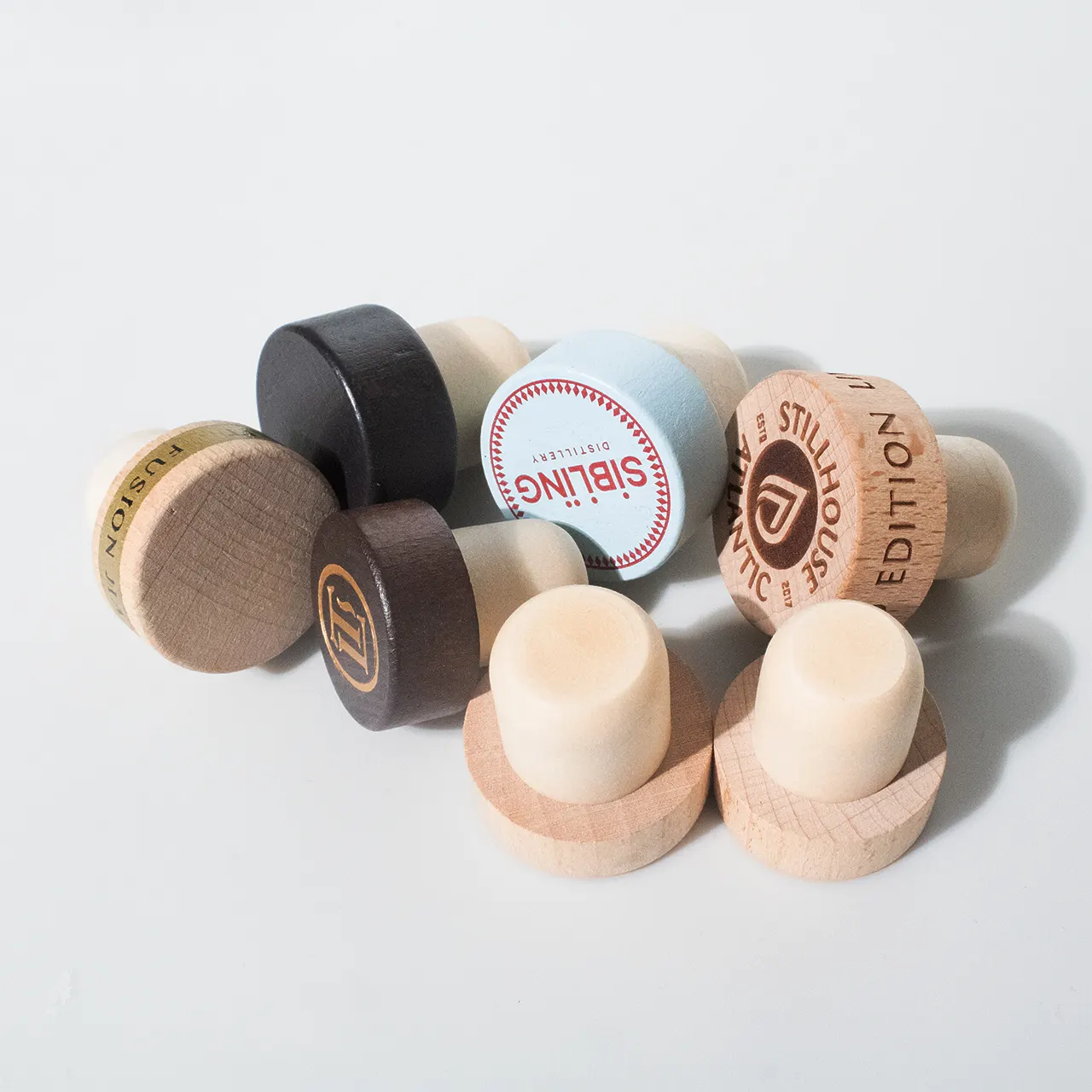
Wooden bar-top stoppers are a popular choice for premium whiskey and spirits. Our wooden tops are made from natural beech wood, offering a clean, natural finish that suits different bottle designs. They can be paired with different stopper materials, including polymer, synthetic cork, and natural cork, depending on the product's closure requirements and budget. Buyers can choose the combination that best fits their brand positioning and sealing needs. For custom logo embossing, the logo design and processing method should be confirmed based on the wooden top's specifications.
Plastic caps offer flexibility in shape, color, and molded details. A logo can often be formed directly into the component. This option may suit brands looking for consistent results across larger production runs. The supplier should confirm the achievable logo depth and level of detail.
Metal closures can provide a clean, modern finish. Depending on the design, the logo may be embossed or stamped into the metal. Gold, silver, and brushed finishes offer different visual effects. Buyers should check the available processes before choosing a final design.

Good artwork is the starting point for successful custom logo embossing. Provide your supplier with a vector file in AI, EPS, or editable PDF format. This allows the design team to assess the logo's proportions and line thickness. High-resolution images can support early discussions, but vector artwork is usually better for tooling preparation.
Keep the design clear and easy to recognize. Very small text and thin lines may lose definition on a compact cap surface. In some cases, a simplified logo will produce a better result than the full brand artwork. Ask your supplier to review the design before the mold is made.
You should also confirm the logo position, dimensions, and relief depth. A technical drawing helps both sides agree on the details. This step can reduce revisions and keep tooling costs under control.
Once the artwork is approved, the supplier can assess the tooling requirements. Costs depend on the material, cap structure, logo complexity, and manufacturing method. Using an existing cap design may cost less than developing a completely new component. Ask whether the quotation includes the full mold or only the logo tooling.
Always review a physical sample before mass production. Check the logo definition, surface finish, color, and overall appearance. Make sure there are no rough edges or incomplete details. The sample should also match the approved technical drawing.
For a new whiskey launch, sample approval is especially important. The cap needs to complement the bottle, label, and outer packaging. A logo that looks attractive on screen may appear too small on the finished product. A physical sample gives your team a clearer basis for approval.
A good-looking cap is not enough if it does not fit the bottle properly. Buyers should confirm the neck finish, stopper dimensions, insertion depth, and retention requirements. The closure must work with the selected bottle and sealing method. These specifications should be agreed upon before final approval.
For distilleries using automatic filling lines, compatibility is particularly important. Changes in cap height, diameter, or shape can affect feeding and closure application. Ask your supplier whether the proposed design suits your existing equipment. Where possible, test samples on the actual bottling line before placing a large order.
The entire packaging process also matters. Finished bottles may pass through filling, capping, labeling, inspection, and carton packing. Decorative bar-top stoppers must remain stable during handling. Their dimensions should also suit the dividers and cartons used for shipping.
Custom logo embossing often requires an initial tooling investment. The unit price depends on material, decoration, cap construction, and order quantity. Larger orders may spread the tooling cost across more units. However, the lowest price is not always the best choice if quality or compatibility suffers.
Consider a craft distillery preparing its first 5,000 bottles. Using an existing bar-top stopper with a customized top may be a practical starting point. A larger producer with regular orders may benefit from dedicated tooling. The right option depends on expected demand and long-term production plans.
Request quotations at several quantities, based on your supplier's minimum order requirements. Ask for separate prices for tooling, samples, caps, and additional decoration. This makes it easier to compare suppliers fairly. Also confirm sample lead time, mold development time, and mass production schedules.
Sample approval is only the beginning. The supplier must reproduce the approved design throughout the production run. Agree on quality standards before manufacturing starts. These should cover logo clarity, dimensions, color, surface finish, and visible defects.
Pay particular attention to embossed details. The logo should be recognizable, with no obvious variation between caps. If the design includes multiple components, each part should meet the agreed specifications. Keep an approved sample as a reference for future orders.
Packaging also deserves attention. Caps can become scratched or damaged if they move freely inside cartons. Decorative wooden tops may require additional protection during transport. Ask your supplier how the caps will be packed for shipment.
One common mistake is choosing a logo with too much detail. Fine lines and small lettering may not reproduce well on a small cap. Another is approving a design without checking its fit on the actual bottle. Both problems can lead to extra costs and production delays.
Buyers should also avoid comparing quotations by unit price alone. Tooling, samples, decoration, and packaging may be charged separately. Confirm exactly what each offer includes. Clear specifications make purchasing decisions easier.
Finally, allow enough time for sampling and revisions. Custom tooling can add time before mass production begins. Approving the artwork and technical drawing early helps keep the project on schedule.
Custom logo embossing gives whiskey bottle caps a distinctive look and helps reinforce brand identity. The best results come from choosing the right material, preparing suitable artwork, and checking samples carefully. Bottle neck compatibility and filling line performance are equally important for commercial production.
When contacting a supplier, provide your logo file, preferred cap material, bottle specifications, estimated order quantity, and target delivery date. Request an itemized quotation and a physical sample before approving mass production. With proper planning, custom logo embossing can become a practical upgrade for premium spirits packaging.